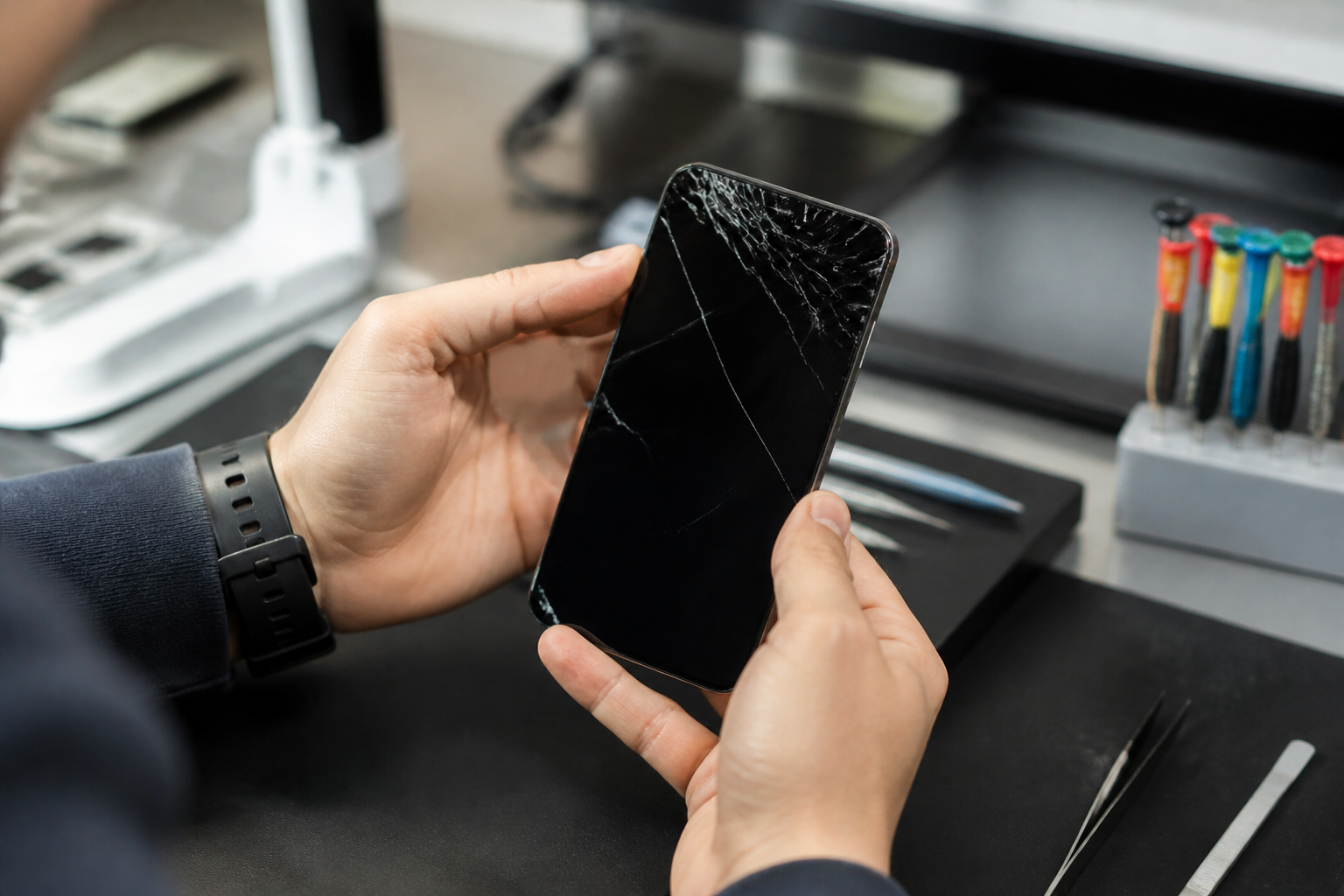
A cracked outer glass and a failed display panel cost different amounts, and you cannot always tell them apart by looking through the front of the phone. Light catches every spiderweb the same way. Touch can feel fine on a dead OLED and terrible on glass that still shows a perfect picture. That is why we do not quote “screen repair” from a photo alone.
This guide is the long version of the check we run at the counter before any money changes hands. It is written for anyone who has dropped a phone, seen a white line, lost half the touch area, or been told by a friend that “glass is cheap.” Models differ. Parts differ. Use this as a map so the conversation at the desk makes sense when you arrive.
What “screen” actually means
On most modern phones the front is a stack: outer glass, digitiser (the touch layer), and the display panel that draws the image. Some assemblies glue those layers into one piece. Others let a skilled shop replace glass alone when the panel underneath still works. The price gap between those jobs is large, so naming the fault correctly matters more than rushing the teardown.
People often use “digitiser” and “screen” as if they were the same word. They are not. A digitiser failure is usually touch: dead zones, ghost taps, or a half of the display that ignores fingers while the picture still looks normal. A panel failure is visual: black areas, colour bleed, flickering, lines, or a backlight that never comes up. Cracked glass can sit on top of either — or on top of a panel that is still perfect.
When someone says “just replace the glass,” we translate that into a real question: is the panel healthy, is glass-only available for this model, and will the repair keep Face ID, True Tone, or under-display fingerprint working the way you expect? Those answers come from inspection, not from hope.
What we look at before we open anything
Under good light we map the cracks. A single chip in a corner with full brightness and full touch is a different starting point from a shattered centre with black blotches underneath. We power the phone if it will turn on and walk a checklist: brightness steps, dead pixels, colour uniformity, touch grid across the whole surface, biometrics, cameras, and a quick call audio check so unrelated faults are written down before the frame comes apart.
If the device will not turn on, we still look for liquid markers, bent frames, and impact points. A bent mid-frame can make even a perfect new assembly sit proud or leave gaps. That belongs on the quote as frame work or as a warning that glass-only may not seat cleanly — not as a surprise at pickup.

The open-device check
When the outside view is ambiguous, we open the device at the counter whenever the design allows a safe first look. Opening is how we see whether the panel still draws a clean image once the broken glass is understood in context, whether the digitiser flex is torn, and whether connectors are dirty or partially seated from a previous drop.
You stay for that first look when we can do it safely in front of you. You see what we see. If the glass is broken but the panel underneath still works, we say so — a glass-only repair costs less than a full assembly when that option exists for your model. If the panel is dead, bleeding, or the digitiser has failed, we quote the full assembly and explain why glass-only would leave you with the same visual or touch fault.
We do not lever against the board to “just peek.” Battery disconnect comes first whenever the model allows it. The goal of the first open is diagnosis and a named quote, not starting irreversible work before you approve the part.
Common symptoms and what they usually mean
Spiderweb cracks, perfect picture, full touch. Often glass damage on a healthy panel. We still confirm — hairline panel damage can hide under bright wallpaper. Soft white or grey patches under the crack are a warning that the OLED or LCD may already be compromised.
Picture fine, touch dead on one side after a drop. Points strongly at digitiser or its flex. A full assembly is common on phones where glass and digitiser are fused.
Black ink blot, coloured bleed, or a hard line across the image. Panel damage. Glass-only will not fix it. We show you the fault on the lit display before quoting the assembly.
Phone boots, no image, but you hear sounds or feel haptics. Could be panel, backlight, connector, or board. That is a deeper check — not a counter guess from the waiting chair.
How the quote is written
A quote here names the part and the job: glass-only where available, or full display assembly, plus labour. If a genuine panel is in stock, that is the first offer. If stock is short, we explain the aftermarket or refurbished option in plain language — price, colour match, and warranty — before you decide.
Secondary damage found during the open goes on the note: bent frame, torn flex, water marks, missing screws from a prior shop. Those items change either the price or the risk conversation. We would rather pause than pretend a cracked phone is only a cracked phone.
What happens after you approve
We pull the agreed part, show you the box or sealed bag when there is one, and put that name on the invoice. The old assembly comes out, connectors are cleaned and reseated, and fresh adhesive goes in so the new front sits the way the original did. After reassembly we repeat the intake checks: display, touch, biometrics, cameras, and charge. Anything that worked before the job and fails after gets fixed before we call you for pickup.
Your data stays on the device for a normal screen job. Back up anyway. Bring your unlock method so we can test. We do not need you to remove Find My for a standard display swap.
When to bring it in sooner
If sharp glass is shedding into the case, tape the front for travel and come in — loose shards cut fingers and can scratch the panel underneath further. If the phone is swollen and the glass is lifting, stop charging overnight and bring it in as a battery-and-display conversation, not a DIY press-flat attempt.
Photos help for a rough idea, but they do not replace the counter check. Lighting hides bleed. Screen protectors hide cracks. The only quote we stand behind is the one after we have looked — and, when needed, opened — the device in front of you.
If you are unsure whether you need glass or a full screen, bring the phone in. We will run the checks above, name the fault, and only then ask you to approve the part that goes on the bench.